

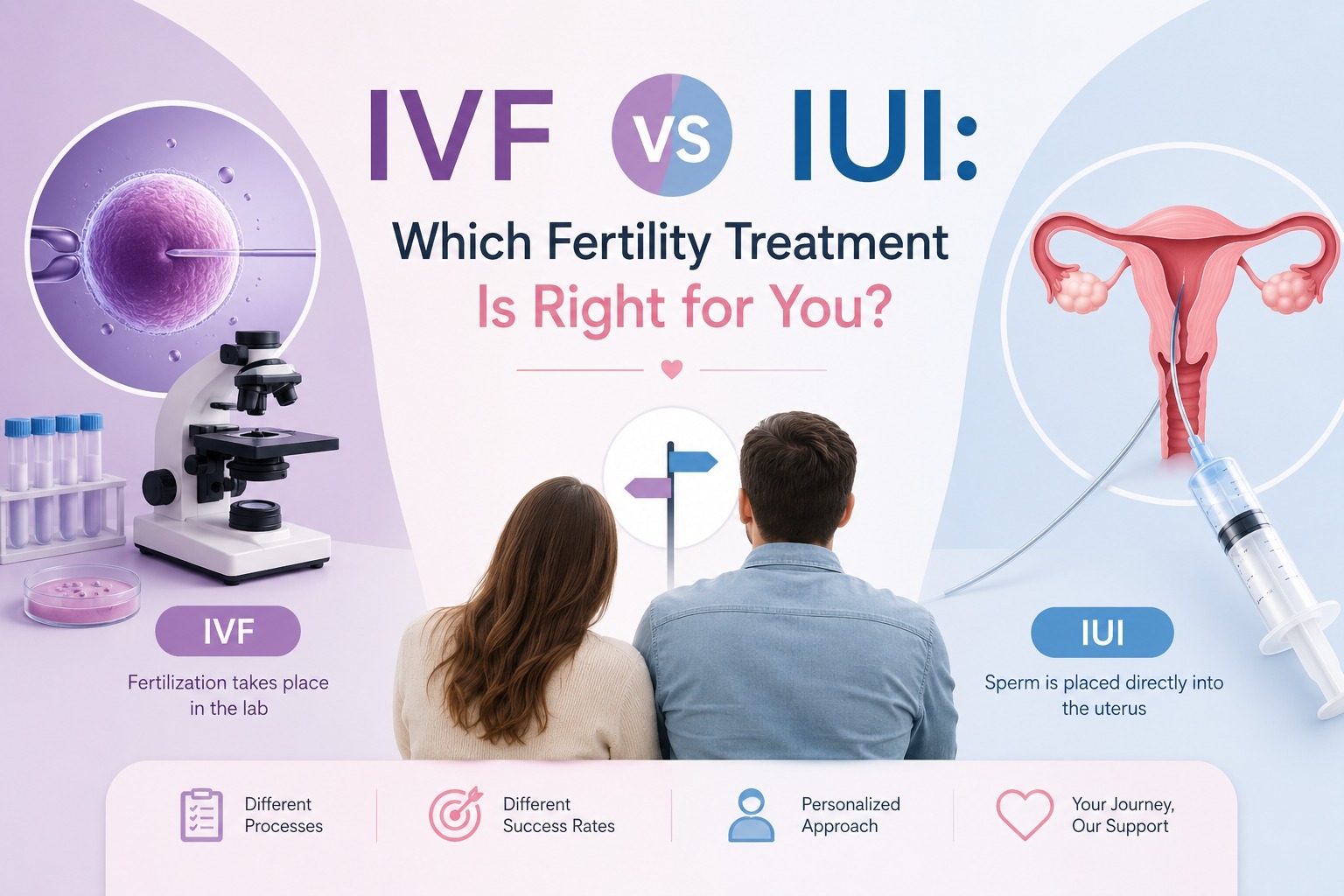
IVF vs IUI: Which Fertility Treatment Is Right for You?
Choosing the right fertility treatment can feel like a crossroads. For many couples, two common options are Intrauterine Insemination (IUI) and In Vitro Fertilization (IVF), but they differ in how they work, how long they take, how much they cost and who they suit best. This guide explains both treatments in clear, practical terms to help you talk with your fertility specialist and decide which path is most likely to help you reach your goal of parenthood.
1. What are IUI and IVF?
- IUI (Intrauterine Insemination): A simpler, minimally invasive procedure in which specially prepared sperm is placed directly into the uterus around ovulation. Fertilization still happens inside the body.
- IVF (In Vitro Fertilization): A more advanced assisted reproduction method where eggs are retrieved from the ovaries, fertilized with sperm in a laboratory and the resultant embryos are transferred back into the uterus.
2. How IUI Works
- Cycle Monitoring: Ultrasounds and blood tests track follicle growth and ovulation.
- Ovulation Trigger or Mild Stimulation: Some patients take oral or injectable medications to improve timing or increase egg availability.
- Sperm Preparation: A semen sample is "washed" in the lab to concentrate motile sperm and remove debris.
- Insemination: The prepared sperm is inserted into the uterus using a thin catheter. The process is quick, usually painless and requires minimal recovery.
3. How IVF Works
- Ovarian Stimulation: Daily hormone injections stimulate the ovaries to produce multiple mature eggs.
- Monitoring: Regular ultrasounds and blood tests guide timing.
- Egg Retrieval: A brief, image-guided procedure performed under sedation collects the eggs.
- Fertilization: Eggs are fertilized with sperm in the lab (conventional IVF or ICSI when sperm issues exist).
- Embryo Culture and Selection: Embryos are observed for several days to pick the healthiest for transfer.
- Embryo Transfer: One or more embryos are placed into the uterus.
- Pregnancy Test: A blood test about two weeks after transfer determines success.
4. Who Is a Good Candidate for IUI?
IUI may be recommended when the fertility challenge is relatively mild and less invasive approaches are reasonable. Typical scenarios include:
- Mild male-factor infertility (low sperm motility or count but sufficient for IUI)
- Unexplained infertility after basic testing
- Ovulation disorders (when combined with ovulation induction)
- Cervical factor issues (hostile cervical mucus)
- Use of donor sperm
Many clinicians recommend attempting several IUI cycles (commonly 3–6) before moving to IVF, particularly in younger patients with otherwise normal fertility indicators.
5. Who Should Consider IVF?
IVF is usually advised when natural conception or simpler treatments are unlikely to succeed. Typical indications include:
- Blocked or damaged fallopian tubes
- Severe male-factor infertility (often treated with ICSI)
- Low ovarian reserve or advanced maternal age
- Endometriosis affecting fertility
- Recurrent pregnancy loss where embryo issues are suspected
- Genetic conditions requiring preimplantation genetic testing (PGT)
- Multiple failed IUI cycles or other treatments
6. Success Rates and What Affects Outcomes
Both IUI and IVF success depend on several overlapping factors: maternal age (the single most important factor), egg and sperm quality, uterine environment and overall reproductive health, and lifestyle factors such as weight, smoking, alcohol and stress.
| Treatment | Typical Success Rate |
|---|---|
| IUI | About 10–20% chance per cycle for properly selected patients |
| IVF | Broadly 40–60% per cycle in younger patients, but outcomes fall with age and vary by clinic and technique |
7. Costs and Financial Considerations
Cost is a major factor when choosing treatment. IUI is less expensive per cycle but may require multiple cycles. IVF has a higher upfront cost but often delivers a better success rate per cycle, which can make it more cost-effective in complex cases. When deciding, consider:
- Upfront cost per cycle
- Likely number of cycles needed
- Additional procedures (ICSI, PGT, embryo freezing)
- Emotional and time costs
If you want, Fertylity IVF can provide estimated cost ranges tailored to your situation and location.
8. Risks and Side Effects
- IUI: Generally low-risk. Possible mild cramping, light spotting and a small infection risk. Using ovarian stimulation increases the chance of multiple pregnancy.
- IVF: Risks include ovarian hyperstimulation syndrome (OHSS), discomfort from injections, procedural risks during egg retrieval and higher chance of multiples if multiple embryos are transferred. Emotional stress can be greater due to the intensity and financial commitment.
9. Can Treatments Fail and What Next?
Yes. Neither IUI nor IVF guarantees pregnancy. After failed IUI cycles, many patients move to IVF, especially if other factors suggest low IUI success. If IVF fails, your clinic will review embryo quality, test results and possible adjustments such as different stimulation protocols, genetic testing or donor gametes.
10. Practical Lifestyle Tips to Improve Outcomes
- Maintain a healthy weight and balanced diet
- Avoid smoking and limit alcohol
- Moderate regular exercise, avoid excessive high-impact training during treatment
- Keep caffeine moderate
- Prioritize sleep and stress management
- Follow medication schedules and clinic guidance closely
11. Making the Decision: Questions to Ask Your Specialist
- What is the likely cause of our infertility?
- What are our chances with IUI vs IVF, given our age and test results?
- How many IUI cycles would you recommend before trying IVF?
- What are the full costs, including medications, monitoring and lab fees?
- Do we need additional tests or genetic screening?
- What emotional support or counseling is available?
Conclusion
There's no universal answer to "IVF or IUI?" The right path depends on your diagnosis, age, budget and personal preferences. IUI can be a good, low-cost first step for mild issues. IVF offers the best control and higher success rates for more complex problems. The most helpful next step is a thorough evaluation by a fertility specialist who can recommend a personalised plan.
At Fertylity IVF, our team offers compassionate, evidence-based care and will walk you through diagnostic testing, realistic success estimates and treatment options tailored to your circumstances. If you're ready, schedule a consultation to explore which route best aligns with your goals and medical needs.
FAQs
IVF generally has higher success rates per cycle, especially for moderate to severe fertility problems. IUI can be effective for select mild cases.
Many clinicians suggest 3–6 cycles for suitable candidates, but this varies with age and diagnosis.
IUI is quick and usually causes minimal discomfort. IVF involves injections and an egg retrieval procedure; discomfort is typically manageable and transient.
Yes, natural conception remains possible after unsuccessful IUI, depending on the underlying cause.
For mild infertility, IUI or medical management may be appropriate, IVF is best when less invasive treatments are unlikely to work.